Repo Man Is Coming: The Cold Math of Saving Your Car vs. Walking Away
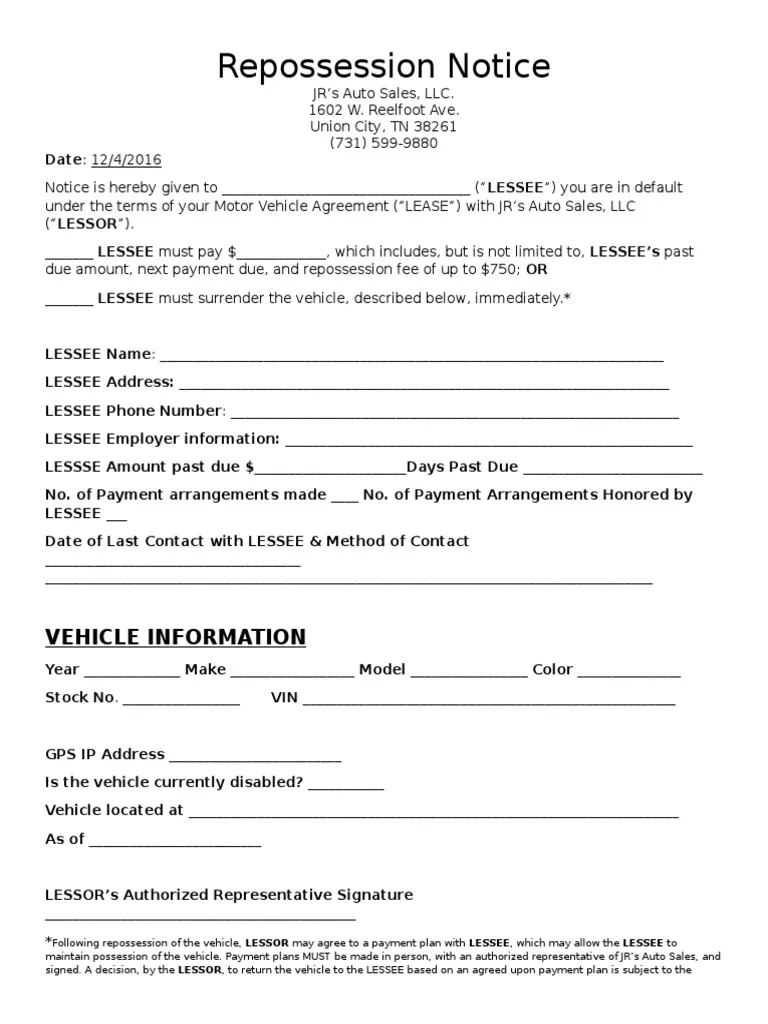
Photo: stressed person looking at car loan documents repossession notice, via imgv2-2-f.scribdassets.com
Your lender sent a letter, or maybe they called. You're behind on payments, and repossession is no longer a vague threat — it's a real possibility with a real timeline. Maybe 48 hours, maybe less.
The instinct is to do whatever it takes to keep the car. But instinct and math aren't always on the same page. Sometimes fighting to save a vehicle makes complete financial sense. Sometimes it quietly destroys you. The only way to know which situation you're in is to stop reacting and start calculating.
This is how you do that.
What Repossession Actually Costs You (It's More Than the Car)
Losing a vehicle to repossession isn't just inconvenient — it's expensive in ways that hit you long after the tow truck leaves.
Here's what typically happens after a repo:
- The lender sells the car at auction, usually well below market value
- You're billed for the deficiency balance — the gap between what the car sold for and what you still owed, plus fees
- The repossession hits your credit report and stays there for seven years
- Financing another vehicle becomes significantly harder and more expensive — lenders will see the repo and price their risk accordingly
- Without transportation, your ability to earn income may be directly impacted
That last point is often the one people underweight. If losing your car means losing your job, or losing hours, or spending $400 a month on rideshares to get to work, the financial damage compounds fast.
The Numbers You Need to Run Right Now
Before you do anything, gather these figures:
- How much are you behind? (Total past-due amount, including any late fees)
- What's your remaining loan balance?
- What is the car actually worth? (Check Kelley Blue Book or Carmax's online estimator)
- What would it cost you to get to work without the car for 6–12 months?
- What does your lender say it would take to reinstate the loan?
That last one is critical. Call your lender today — not tomorrow — and ask specifically whether reinstatement is an option and what the exact dollar amount would be. Many lenders would genuinely rather collect than repo; the process costs them time and money too.
Scenario A: The Car Is Worth Fighting For
Let's say you're $1,800 behind on a car with a $12,000 remaining balance. Kelley Blue Book puts the car's private party value at $14,500.
In this case, you have equity. The car is worth more than you owe. If it gets repossessed and sold at auction for $9,000, the lender still comes after you for the $3,000 difference — plus repo and storage fees. You lose the car AND owe money.
Here, borrowing $1,800 through an emergency personal loan to reinstate the loan is almost certainly the right call. You protect an asset that has real value, preserve your credit, and avoid the deficiency spiral.
The cost of that loan — even at a higher interest rate — is likely a fraction of the total damage a repo would cause.
Scenario B: The Math Says Let It Go
Now consider a different situation. You're $3,200 behind on a car with a $15,000 remaining balance. The car's actual market value is $11,000 — you're already underwater.
If you borrow $3,200 to reinstate the loan, you're taking on new debt to keep paying on an asset you already owe more on than it's worth. And if the underlying reason you fell behind — reduced income, a medical bill, another debt — hasn't changed, you may be right back in the same position in three months.
In this scenario, surrendering the vehicle voluntarily (which is different from having it repossessed — it's slightly better for your credit and avoids some fees), negotiating the deficiency balance, and redirecting your energy toward securing alternative transportation might be the smarter path.
It's not a good option. But it might be the least bad one.
The Voluntary Surrender Middle Ground
If the math leans toward walking away, don't just wait for the repo — call your lender and arrange a voluntary surrender. This tells the lender you're cooperating, which can sometimes result in them waiving or reducing the deficiency balance. It also avoids the drama and additional fees associated with an involuntary repossession.
Get any agreement in writing before you hand over the keys.
When Emergency Financing Is the Right Bridge
For borrowers in Scenario A — or anyone where the car's value clearly exceeds the debt — emergency personal loans can be a legitimate and financially sound tool. The key questions to ask yourself:
- Can I realistically make the regular payments going forward? If the reason you fell behind was a one-time emergency (unexpected medical bill, short-term job loss you've since recovered from), then yes, bridging the gap makes sense. If your budget structurally can't support the payment, borrowing to catch up just delays the inevitable.
- Is the reinstatement amount within reach? Lenders like XpressLoans 911 can move fast — applications in minutes, decisions quickly, funds potentially available the same day. If the window is 48 hours, that timeline matters.
- What does the total cost of borrowing look like versus the total cost of losing the car? Do this math explicitly. Write it down. The numbers will usually make the decision obvious.
A Quick Comparison Table
| Situation | Car Value vs. Loan | Recommended Move |
|---|---|---|
| Behind $1,500, car worth more than loan | Positive equity | Emergency loan to reinstate |
| Behind $3,000, car worth less than loan | Underwater | Consider voluntary surrender |
| Behind $1,000, car essential for work | Any | Prioritize reinstatement |
| Behind $4,000, can't afford payments going forward | Any | Surrender + negotiate deficiency |
Don't Let Panic Make the Decision
Repossession timelines create pressure, and pressure makes people do expensive things. The borrower who panics and takes on $3,500 in emergency debt to save a car that's headed for the same outcome three months later isn't better off — they're just broke in a different way.
But the borrower who runs the numbers, sees that they have real equity to protect, and uses a fast personal loan as a bridge to reinstatement? That person made a smart, strategic call.
Know which situation you're in before you act. The math will tell you.